.png)

Difference Between Burnout vs Stress: What’s Draining Your Energy and How to Fix It

Updated: Mar 27
A story of my patient James, a 28-year-old marketing professional who used to wake up excited for Monday mornings. Lately, though? He's been hitting snooze five times, dragging himself through the day, and feeling completely exhausted by 3 PM. Something that often signals he needs to focus on healthier coping strategies, like these healthy ways to manage stress and anxiety. He tells himself, "I'm just stressed." But is that really all it is? Or has the stress escalated to a higher level, burnout?
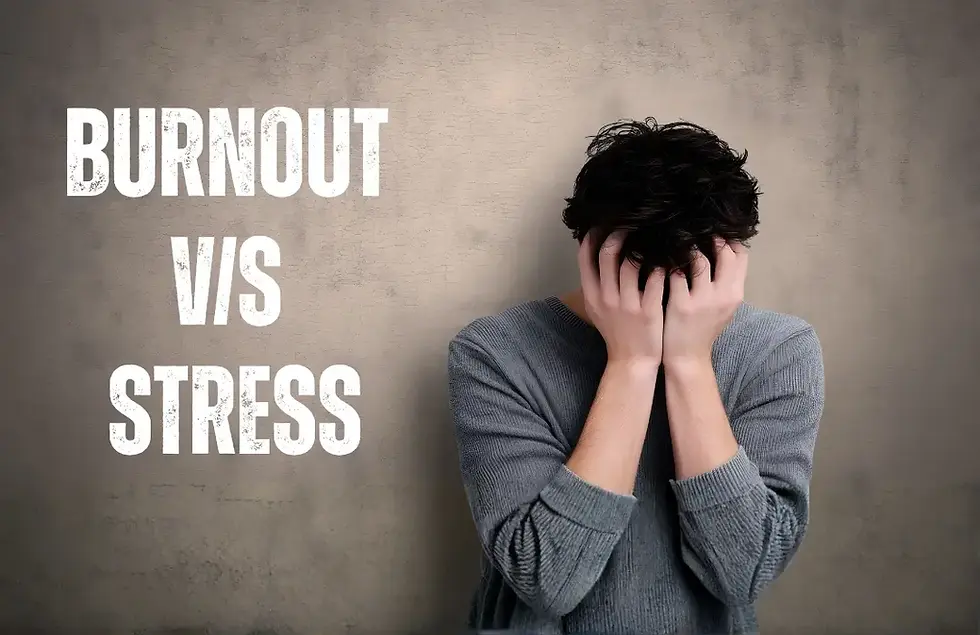
If you've found yourself in the same situation, you're not alone. According to a 2025 report by Mental Health UK, a staggering 91% of respondents experienced high or extreme levels of stress or pressure at some point over the past year. Even more alarming? Recent research shows that 82% of employees are at risk of burnout, marking the beginning of a new crisis in workplace mental health.
So, here's the million-dollar question: What you feel right now is a temporary stress that'll leave once you finish that big project, or is it a burnout that's slowly draining your whole energy? Understanding the difference is the key to recovering your well-being, energy, and passion.
Why Identifying Stress vs Burnout Matters Right Now
Before we look into the nitty-gritty of burnout vs. stress, let's first understand why this distinction is crucial right now:
51% of survey respondents suffered burnout in the past year—a 15 percentage-point increase from the previous year
Mental and emotional stress topped the list at 63% as the primary cause of burnout, followed by long hours at 54%.
Gen Z and millennial workers report peak burnout at just 25 years old—17 years earlier than the average American, who experiences peak burnout at 42.
These aren't just numbers but the voices of millions of people who cannot make up their minds between whether they should have a vacation or a total life makeover. And that's where understanding the stress vs. burnout differences becomes essential.
How Do You Know If You’re Stressed or Burned Out?
Think of stress as your body's alarm system—it's supposed to wake you up, get you moving, and help you tackle challenges. Burnout, on the other hand? It's what happens when that alarm has been clanging for so long that you can't hear it anymore.

Physical and Emotional Signs of Stress vs Burnout
Stress:-
Stress is normally temporary. It's that racing heart just before a presentation, the tension just before a deadline, or the nervousness over a hard conversation. Stress fades away once the stressor is eliminated or once the situation has been resolved. You can see the light at the end of the tunnel, though the path may seem challenging to arrive there.
Burnout:-
Burnout is chronic and persistent. It doesn't lift when you complete the project or take a long weekend. It is a consequence of the extended periods of stress without rest. Burnout, as defined by the World Health Organization, refers to chronic stress at work that has not been managed successfully.
The Emotional Landscape
This is where the chronic stress vs. burnout distinction becomes crystal clear:
When you're stressed:
You feel anxious, worried, or overwhelmed.
You might be irritable or restless.
You are still deeply concerned (sometimes too much).
You can imagine feeling better when everything settles. At this stage, it may overlap with signs of depression, which require a different level of attention and care.
When you're burned out:
You feel emotionally numb or empty.
You're cynical, indifferent, and cold.
You no longer care—not willfully, but because you are worn out.
You can't imagine how things will improve.
As one mental health professional explains, unlike stress, where you can envision how you are going to feel after things calm down, burnout leaves you hopeless. Hopelessness is the major characteristic of burnout.
Physical Symptoms: Stress or Burnout?
Both of these conditions have an impact on your body:
Stress symptoms include:
Headaches and muscle tension
Racing heart or increased blood pressure
Digestive issues or stomach upset
Difficulty sleeping (but you still want to rest)
Increased energy (sometimes nervous energy)
The symptoms of burnout are
Chronic exhaustion that doesn't improve with rest
Weakened immune system (getting sick more often)
Physical pain without a clear cause
Complete energy depletion
Sleep problems and waking up tired
Stress vs Burnout vs Depression: How to Tell the Difference
The stress vs. burnout vs. depression distinction is critical. Burnout involves exhaustion, cynicism, and reduced productivity in the workplace. Depression is broader, affecting all aspects with persistent hopelessness. Research shows burnout may be a risk factor for depression, making early intervention essential.
The Root Causes: What's Really Draining You?
Understanding what's causing your experience helps determine your next steps.
Common Stress Triggers You Might Be Overlooking
Strict deadlines or high workloads
Major life changes (relocating, relationship changes, financial pressures)
Certain challenging situations or conflicts
Short-term increased responsibilities
Top Burnout Causes Backed by Recent Research
According to the 2025 Burnout Report, the top factors driving burnout include:
High or increased workload (50% of women and 44% of men reported this)
Regularly working unpaid overtime beyond contracted hours
Mandatory office returns (26% of workers cited being forced back to the office as contributing to burnout)
Financial stress (particularly impacting young adults aged 18-24, where 62% reported this vs. 31% of those aged 55+)
Parenting responsibilities (50% of parents with children under 4 years reported childcare access challenges)
Lack of control or autonomy in your role
Poor work-life boundaries and inability to disconnect
Insufficient recognition or support
How to Recover From Stress or Burnout
Now for the empowering part: you're not stuck. Whether you're dealing with stress or burnout, here are the practical steps that you can undertake.
How to Reduce Stress Fast: Practical Steps That Work
1. Engage in immediate stress-relief techniques
Short walks or movement breaks
Progressive muscle relaxation
Mindfulness or meditation (even 5 minutes helps)
Those approaches that are also commonly used in holistic mental health practices focus on long-term balance.
2. Set clear boundaries
Learn to say "no" to unnecessary commitments.
Establish work-life boundaries (like not checking emails after 7 PM).
Communicate your limits clearly and confidently.
3. Develop a stress management toolkit
Regular physical activity (even 20 minutes daily makes a difference.
Adequate sleep (7-9 hours nightly)
Social connection and support
Time for activities that you really enjoy.
4. Reframe your thinking
Challenge negative self-talk
Practice self-compassion instead of self-criticism
Focus on what you can control
Celebrate small wins along the way
How to Heal Burnout: What Actually Helps
Burnout should be treated more intensively. Here's what actually works:
1. Take real time off
Not just a weekend—consider a longer break if possible
Truly disconnect (no "just checking emails").
Use this time to rest, not to be productive.
2. Address the root causes
Have honest conversations with your supervisor about workload
Explore whether your current role or environment is sustainable.
Consider whether a job change might be necessary (yes, really).
3. Rebuild your energy reserves
Prioritize sleep, as your life depends on it.
Engage in activities that genuinely restore you
Reconnect with what brings you joy and meaning.
4. Seek professional support
Consider therapy with someone who specializes in burnout.
Explore your company's Employee Assistance Program (EAP).
Connect with organizations like Mosaic Mental Health for resources and support
If you're currently on medication, understanding A guide to safely stopping SSRIs like Zoloft or Lexapro
5. Make structural changes
Delegate tasks where possible
Renegotiate the duties or deadlines
Create better systems and processes to reduce overwhelm
Build in regular recovery time, not just crisis intervention
When to Seek Help for Stress or Burnout
If you're reading this and identifying yourself with the burnout description, then act before it is too late. Reach out to Mosaic Mental Health and Wellness. Check in with yourself regularly. And remember: seeking help isn't weakness—it's wisdom.
You've got this. And you don't have to do it alone.
Related Post :


kèo nhà cái 5 mình thấy mọi người nhắc hoài nên tò mò bấm vào xem thử giao diện thôi. Mình không có ngồi soi từng mục hay nội dung chi tiết, chủ yếu xem cách họ sắp xếp trang cho dễ dùng không. Ấn tượng đầu là bố cục khá thoáng, các phần được chia thành từng khối nhìn phát hiểu ngay chỗ nào là thông tin chính, lướt xuống cũng không bị ngợp. Mình thích kiểu bảng số liệu họ trình bày theo cột gọn gàng, nhìn nhanh là nắm được mà không rối mắt. Menu để chỗ dễ thấy nên chuyển qua lại vài mục cũng tiện, không phải bấm vòng vèo. Nói chung cảm giác như…